



Building Suppressors For the Real World
Building Suppressors for the Real World
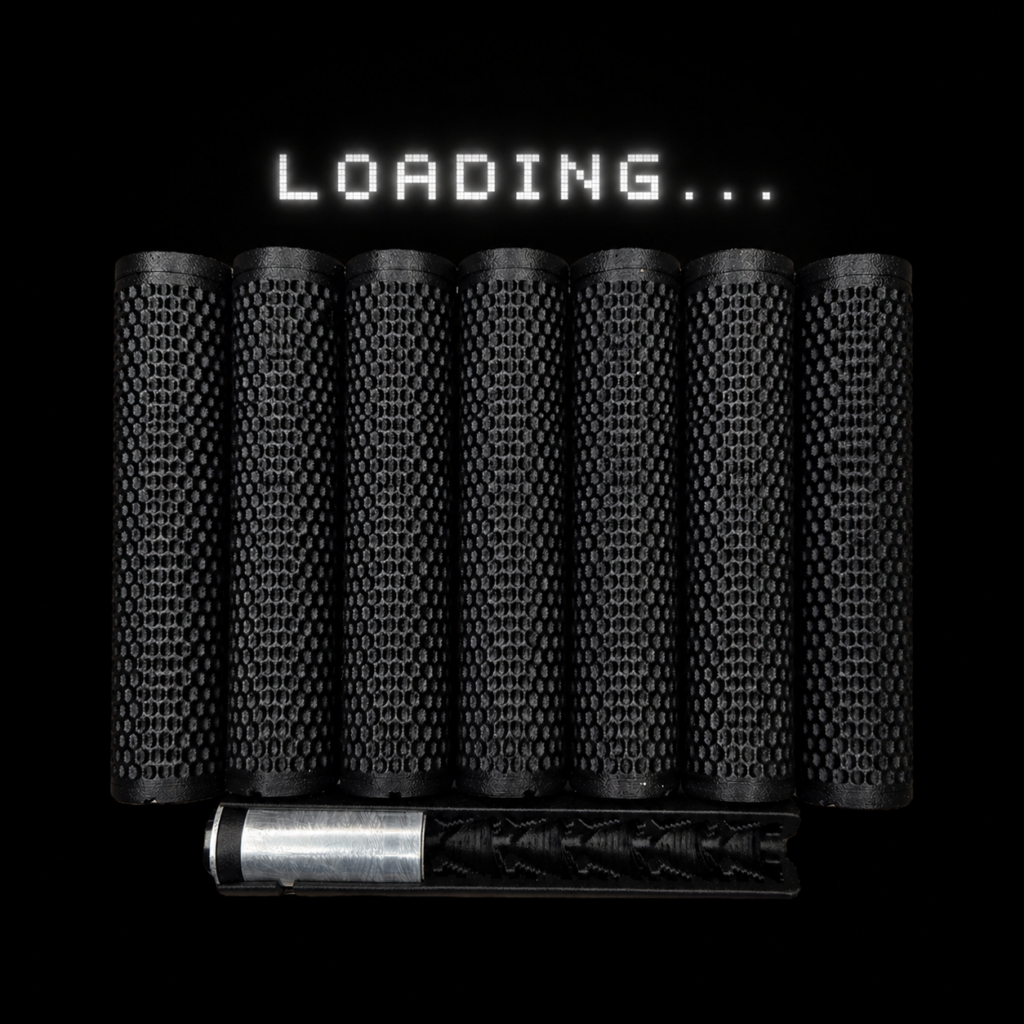
From the FTN project to FTW-Arms — why we believe suppressors should be accessible, innovative, and built to be used.
FTW-Arms didn’t begin as a traditional firearms company.
It started with a question:
Why are suppressors still treated like luxury items?
For decades, the suppressor industry has been dominated by expensive manufacturing methods, high prices, long wait times, and products marketed like collector pieces instead of practical tools. Meanwhile, in many other parts of the world, suppressors are viewed as normal equipment — simple hearing protection that responsible shooters are expected to use.
We believe America is moving in that direction.
And we believe modern manufacturing can help get us there faster.
The Origins of FTW-Arms
Before FTW-Arms existed, we were deeply involved in the enthusiast-driven FTN project and the evolution of modern suppressor concepts built around additive manufacturing.
Those early designs proved something important:
the old rules no longer applied.
Modern manufacturing techniques made it possible to create internal geometries and flow structures that traditional subtractive manufacturing simply could not produce efficiently — or at all.
But early success also revealed limitations.
Turning an enthusiast project into a true commercial suppressor platform required far more than simply scaling production. It meant redesigning around durability, manufacturing consistency, compliance, repeatability, and real-world use.
So we started testing.
And testing.
And testing some more.
Early stress testing pushed hundreds of rounds through pistol platforms — one of the harshest environments for rimfire suppressors due to shorter barrel lengths and increased particulate and pressure exposure — before moving into extended rifle testing, including over 1,000 rounds through short-barreled rifle configuration.
Some ideas failed immediately.
Some surprised us.
Some evolved into entirely new approaches.
Every iteration taught us something.
As suppressor ownership rapidly expanded, we accelerated testing even further, submitting dozens of designs and configurations in pursuit of better performance, better durability, and better accessibility.
Eventually, it became obvious that this had outgrown the limits of a hobby project.
If we wanted to do this properly, we needed to take the next step:
become licensed manufacturers, invest in compliant infrastructure, and build a company capable of supporting these products long-term.
That decision became FTW-Arms.
Designed Around Reality — Not Spec Sheets
Our suppressors are not the smallest on the market.
They are not the lightest.
Those were intentional decisions.
We chose internal volume, sound performance, affordability, and practical manufacturability over chasing the smallest dimensions possible for marketing purposes.
The result is a suppressor with excellent sound signature characteristics, modern patent-pending reinforced architecture, and a price point that we believe fundamentally changes access to suppressor ownership in America.
Put simply:
we wanted to build suppressors people could actually afford to shoot.
Not just admire in a safe.
Because hearing protection should not be a luxury item.
Built to Be Used
One philosophy that strongly influenced FTW-Arms comes from outside the United States.
In many parts of the world where suppressors are normalized, they are viewed as practical-use equipment — tools designed to be shot regularly rather than treated like fragile collector pieces.
That mindset resonated with us.
For decades, American suppressor ownership has been shaped by high prices, long wait times, and regulatory barriers that pushed buyers toward a “buy once, preserve forever” mentality.
We think there’s another way forward.
Our goal was never to create a suppressor that sits untouched in a safe because replacing it would be financially painful. We wanted to build something accessible enough that people would actually use it — train with it, shoot with it, introduce friends and family to suppressed shooting with it, and genuinely enjoy owning it.
That philosophy shaped every design decision we made.
Our suppressors prioritize practical sound performance, internal volume, affordability, and modern reinforced architecture over chasing the smallest dimensions or the lightest possible weight.
They are built for real-world enthusiasts:
first-time suppressor owners, budget-conscious shooters, early adopters, and experienced collectors looking for a different approach to suppressor ownership.
Like any performance-focused product, suppressors experience wear over time depending on firing schedule, host platform, ammunition selection, and overall use conditions. Our philosophy has always been centered around practical ownership: build suppressors that perform well, remain affordable, and are accessible enough that shooters can focus on using them instead of preserving them indefinitely.
An Evolution — Not an Imitation
FTW-Arms is not a copy of the FTN project.
It is the continued evolution of ideas developed by the same enthusiast community that helped pioneer them in the first place.
What exists today is the result of extensive redesign, reinforcement development, commercial engineering, compliance work, and patent-pending innovation specifically intended for legitimate manufacturing and long-term support.
We’re proud of where these designs started.
But we’re even more excited about where they’re going.
The Future
We believe the future of suppressors will look very different from the past.
More accessible.
More innovative.
More adaptable.
More normalized.
We believe suppressors should be in common use.
Not luxury products.
Not safe queens.
Not products priced out of reach for ordinary Americans trying to protect their hearing.
The future of suppressors should belong to enthusiasts, builders, innovators, and shooters — not just companies with massive manufacturing budgets and decades of legacy infrastructure.
That future is already starting.
And FTW-Arms was built to help push it forward.